
The so-called triumph of the polio vaccine has been elevated to the status of a golden calf in modern vaccinology. It stands as an untouchable idol. Its mythical victory is treated as the holy grail that supposedly proves vaccines are infallible. This legend justifies blind faith in every shot on the vaccine schedule today.
Everyone needs to watch this newly released powerful eye-opening documentary by investigative journalist Jefferey Jaxon of The Highwire titled “Polio: The Founding Myth of Modern Medicine.” This special public release brings together rare historical footage, revealing graphs and interviews with courageous experts who dare to challenge the official narrative about polio and its vaccine.
For those who can’t spare the time right now, here’s a summary/review of what the documentary exposes. Nothing replaces watching it yourself to see the full evidence and feel its impact.
The documentary explains that the standard story of polio as a deadly viral epidemic defeated only by vaccines is a myth. This myth became the foundation for public trust in modern medicine and vaccination programs. What people called “polio” included many paralytic conditions caused mainly by environmental toxins, not the poliovirus. These toxins included pesticides like lead arsenate early on and DDT later. Outbreaks of paralysis matched heavy pesticide use, especially in summer spraying seasons. Cases dropped as DDT was phased out, before the polio Salk vaccine became widespread.
Polio is a mostly harmless gut virus
Poliovirus causes no symptoms in 95 to 99 percent of infections. Before widespread use of DDT and Lead Arsenate the virus did not cause paralysis. Problems arose only when toxins damaged nerves or when medical procedures, such as tonsillectomies and or injections provoked it. A key example often cited by experts, like Dr. Suzanne Humphrie, is the remote Xavante tribe in Brazil. Researchers found that nearly everyone in the tribe (98-100% of hundreds tested) had antibodies showing exposure and immunity to all three strains of the poliovirus, meaning the virus circulated widely among them. Yet the tribe reported no cases of paralysis, crippled children or respiratory failure from polio, supporting the idea that the poliovirus alone is usually harmless and requires additional factors (like toxins) to cause paralytic disease. The original study is: “Studies on the Xavante Indians of the Brazilian Mato Grosso” by James V. Neel et al., published in the American Journal of Human Genetics (1964).

Image of the Xavante people at the time of their forced removal by the military in the 1960s. Image courtesy of FUNAI. [1]
Animals do not catch polio from the poliovirus. Yet, during the very same years when thousands of children were becoming paralyzed and doctors blamed it on polio, farm animals across the country were suffering similar paralysis. Livestock owners routinely dipped cattle, sheep and other animals in huge vats filled with arsenic-based pesticides like lead arsenate or, later, DDT mixtures to kill ticks, lice and flies. These same powerful nerve toxins were sprayed heavily on fields and orchards. Historical veterinary records and studies from that era show that these chemicals caused direct damage to the exact spinal cord cells destroyed in human “polio” cases. Calves and cows that grazed on treated land or drank contaminated milk suddenly developed weak, floppy legs and severe nerve problems. These animal outbreaks happened during the same summer peaks as the human paralysis epidemics. This clear timing and identical damage strongly point to widespread pesticide poisoning as the true cause, rather than the polio virus.
Cattle Dipping Vat (CDV) in Florida
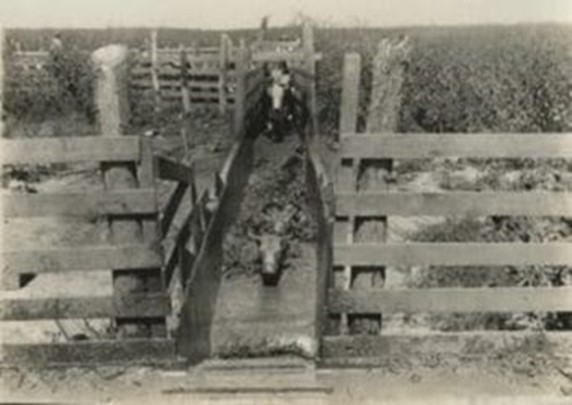
The Cattle Dipping Vats were often elongated concrete trenches, pictured above, that held a water-based solution of pesticides. The main pesticide used for CDV’s was arsenic but could have included dichloro-diphenyl-trichloroethane (DDT) and toxaphene. Florida cattle would have been ushered through narrow pens until reaching the trench and completely immersed in the pesticides for tick removal. Once cattle had completed this process, they would have dripped dry in an additional holding pen. [2]
Lead arsenate use started declining in the late 1940s after DDT came along as a seemingly better alternative. By the 1950s–1960s most agricultural applications had phased out lead arsenate, though some lingered in certain areas.
In the 1940s and 1950, people thought DDT was totally safe. They sprayed it on farms, neighborhoods, beaches, pools, picnics and directly on children and crowds. They believed it stopped polio by killing mosquitoes. DDT accumulated in the environment, food, milk and bodies, acting as a nerve poison.
Paralysis cases matched lead arsenate and DDT patterns: High in sprayed areas, peaking in summer spraying season, when fresh fruits and vegetables heavily coated with lead arsenate or DDT came to market and children eagerly ate the seasonal produce.
The cases dropped as lead arsenic and DDT were reduced. DDT was finally banned in the US in 1972.
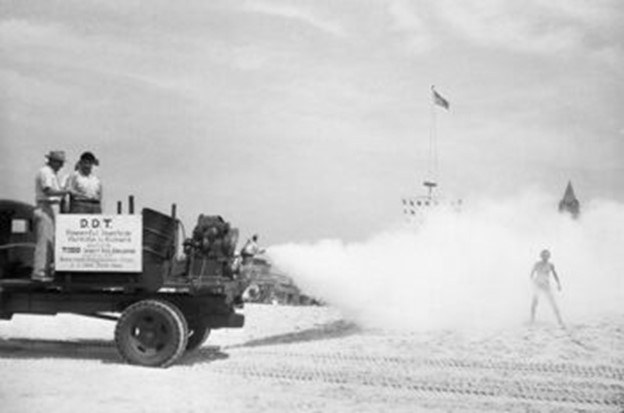
DDT was considered so safe that children were allowed to play in the fog. [3]
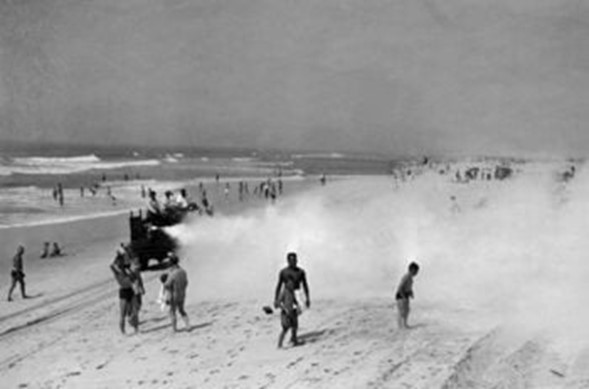
This is a beach in 1945. That giant cloud is DDT. Gamma-Keystone via Getty Images)
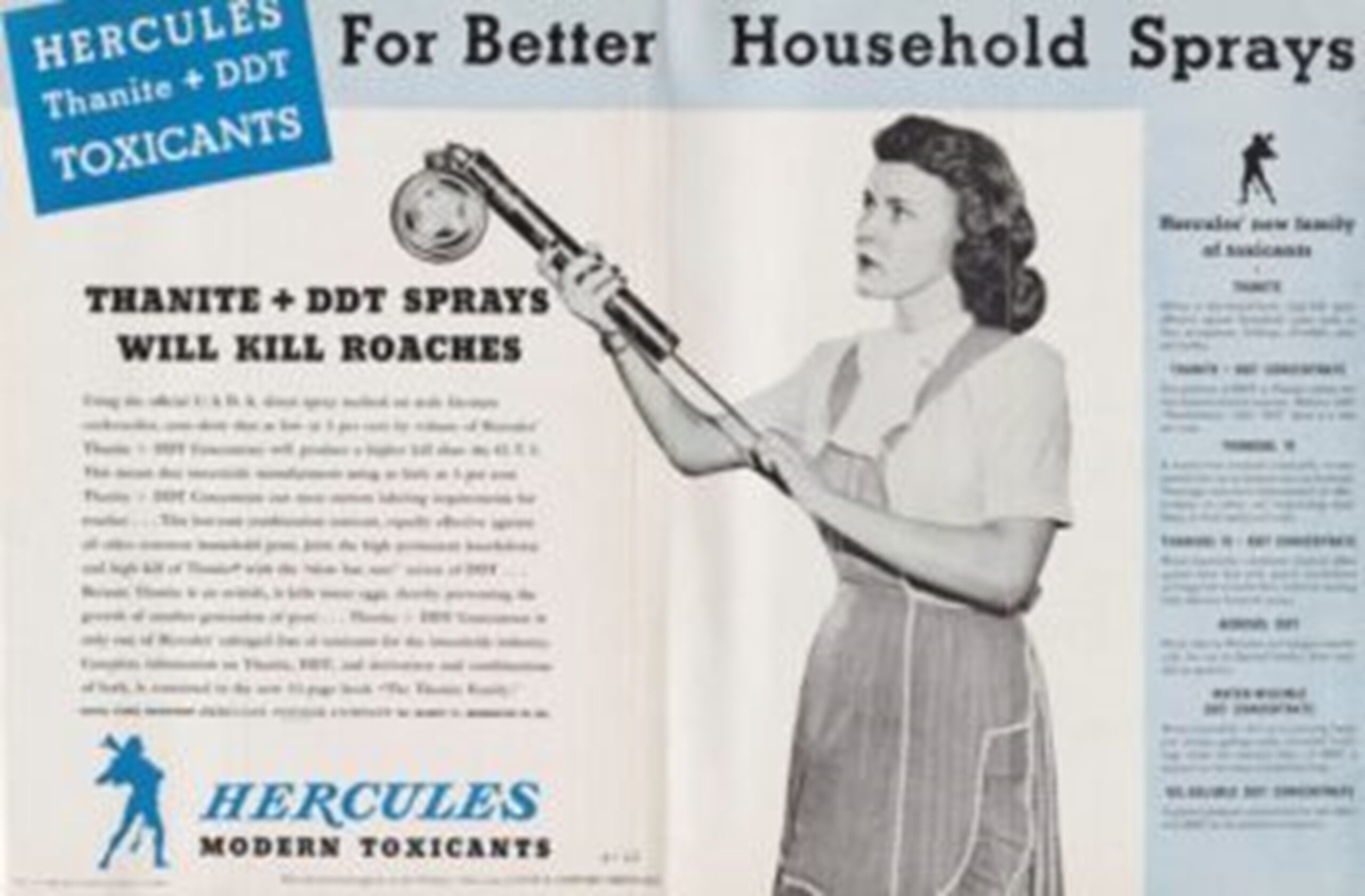
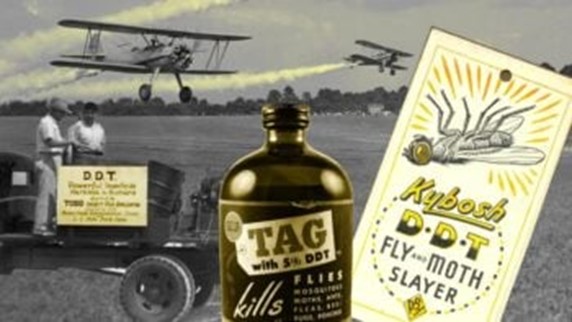
Vintage ads promoted DDT for safe home and personal use. [4]
https://www.sciencehistory.org/collections/blog/the-womans-world-of-pesticides/
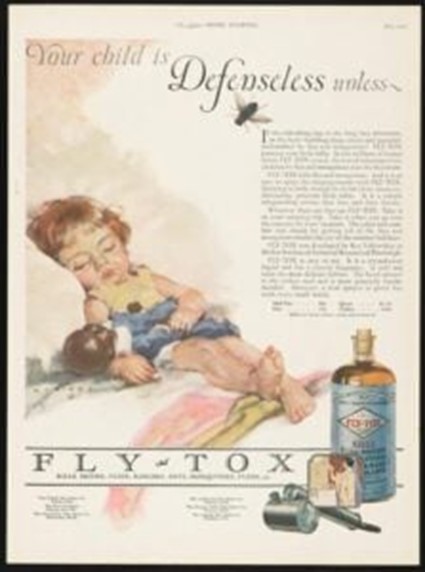
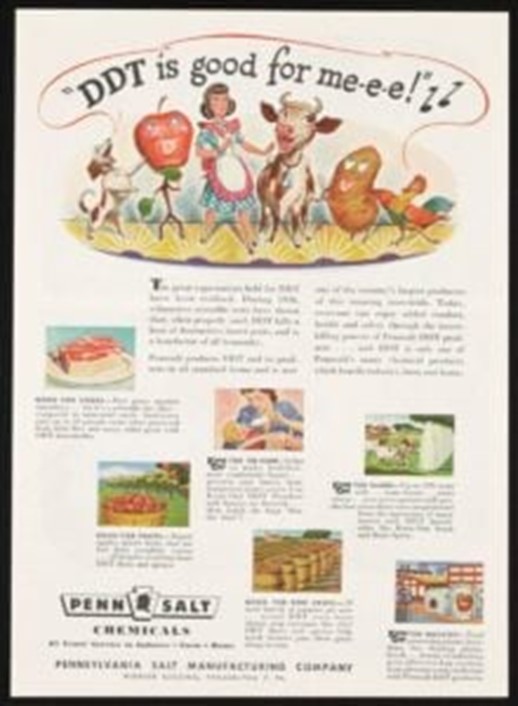
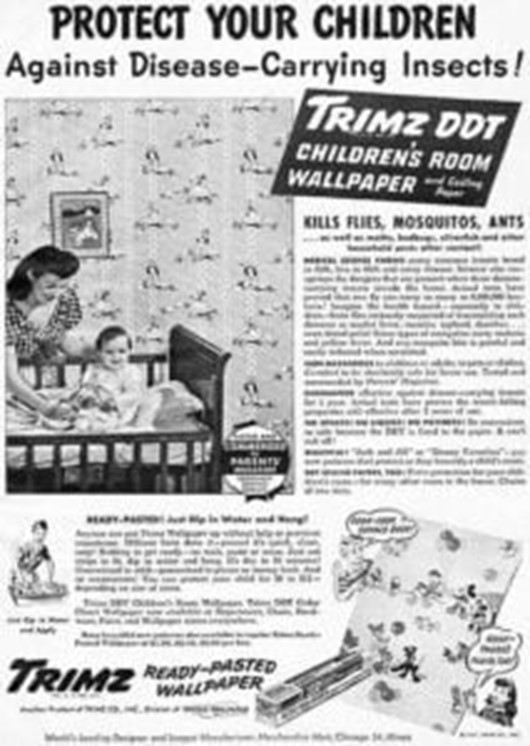
DDT Wallpaper for children’s rooms, with Disney characters in1947
Toxic nerve poisons used for teething babies
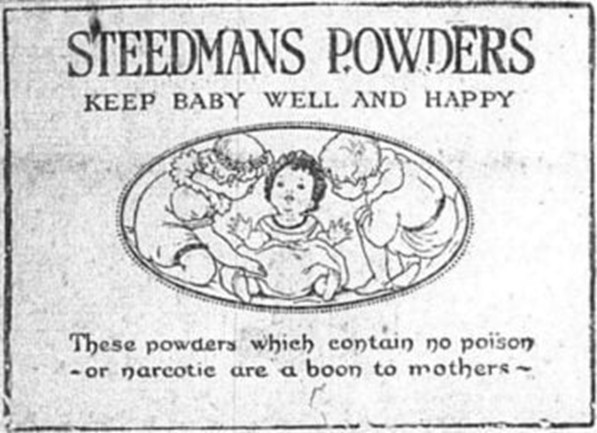
During the same era when polio outbreaks began rising in the late 1800s and early 1900s, doctors and parents commonly gave teething babies highly toxic remedies to ease discomfort and “clear the bowels.” Popular teething powders, like Steedman’s Soothing Powders, contained large amounts of calomel, (mercurous chloride, a mercury compound), while soothing syrups such as Mrs. Winslow’s Soothing Syrup included morphine and alcohol. [7]
These products were marketed as safe and essential for fussy infants. Parents administered them liberally without knowing the dangers. Mercury from calomel is a powerful neurotoxin that can cause nerve damage, muscle weakness, tremors and paralysis – symptoms that closely mimic poliomyelitis. Early cases of childhood paralysis were even called “teething paralysis“. This is because paralysis often struck during teething. Widespread use of mercury-based teething treatments coincided with the first recorded clusters of what doctors later labeled polio. It added another layer of chemical poisoning that contributed to many paralysis cases.[8]
Steedman’s Soothing Powders were used to relieve symptoms of gum inflammation and teething. The resulting symptoms (fevers, convulsions, diarrhea and paralysis) were blamed on the polio virus. The formula was a mystery until 1909 when scientists discovered it contained calomel (MERCURY) which was not removed until 1940. The original formula included OPIUM. It is interesting that it was advertised as safe and containing NO poison or narcotic! “The mantra “safe and effective” was used back then. No wonder these treatments calmed and soothed the teething baby with ingredients like opium and morphine!

The documentary explains why children suffered paralysis far more than adults. Toxins entered through the gut from food, milk or air. Young children’s smaller and still developing bodies placed the spinal cord physically closer to the stomach and intestines. This short distance allowed poisons to reach and damage motor nerves more easily, causing the classic uneven or asymmetric paralysis seen in polio cases. Adults had longer torsos, so the spinal cord was farther away and less affected. This pattern explains why polio was primarily viewed as a children’s disease.
Early Polio Gain of Function Research
In the early 1900s scientists at the Rockefeller Institute worked with the polio virus. They took material from human spinal cords thought to have the virus. Then they passed it over and over through monkey brains. This repeated process altered and strengthened the virus. Scientists and doctors have called this early gain-of-function work because it made the virus more virulent and better at causing disease in lab animals.
Soon after these experiments started around 1909 to 1910, a huge polio epidemic broke out in New York City. It was the biggest one ever in America at that time. The outbreak’s center was in the same location as a Rockefeller lab where the early gain of function work was being done. This timing and location of the polio outbreak raised questions, similar to the situation with COVID-19 which started near a lab in Wuhan that was involved in gain of function research. Many believe that the Rockefeller lab may have created a more dangerous version that was accidentally released and sparked the huge polio epidemic in New York that spread to neighboring areas. As with Covid-19 there was a huge cover-up.
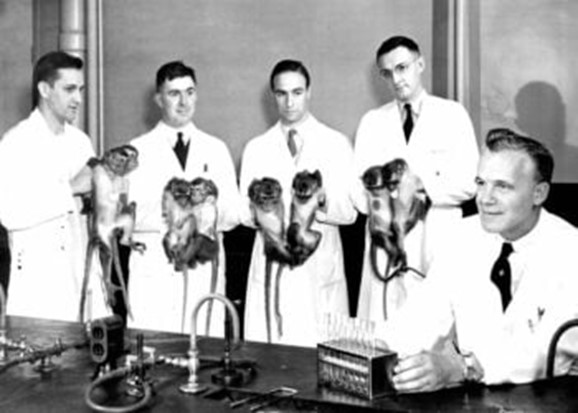
Historical image from early polio monkey experiments at places like the Rockefeller Institute [9]
Polio Outbreak in Troops
During World War II, American troops stationed in places like the Philippines were extensively sprayed with DDT. Soldiers dusted it on their bodies, inside their clothes, over their clothes and living areas to kill bugs and prevent diseases like malaria. Local native people who lived nearby did not get the same heavy spraying. Many reports from that time show that paralytic polio hit the U.S. soldiers but not the locals. The natives even called it a “white man’s disease” because they rarely got it, even though they lived close to the troops. DDT is a strong nerve poison. It can harm the exact parts of the spinal cord that control movement. This damage causes weak, floppy muscles and uneven paralysis in arms or legs. Those symptoms look just like polio. The heavy DDT use on troops caused the cases that doctors blamed on the virus.
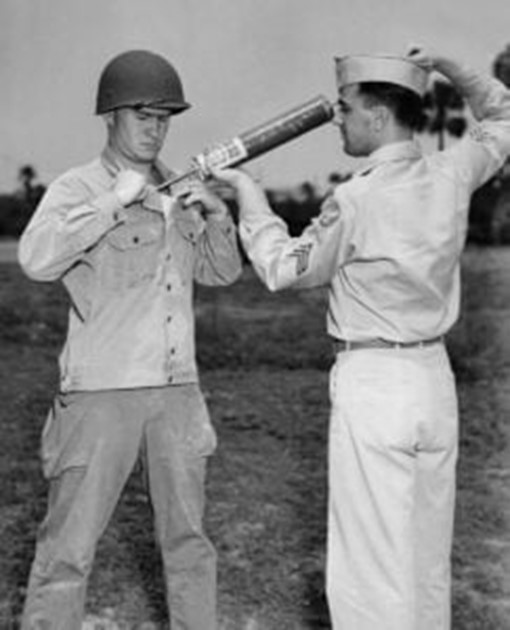
HILE18376DDTSPRAY2
U.S. Soldier demonstrating DDT hand spraying equipment.
tray #160, B 18376
DDT was used extensively in various conflicts – including the Korean war – to reduce the risk of parasite-born infections. [10]
Scare campaign to raise money
The polio vaccine campaign in the 1950s used strong scare tactics to raise money and push for shots. The March of Dimes ran big ads with scary pictures of children in iron lungs or braces. Hollywood stars like Judy Garland, Mickey Rooney, Elvis, Marilyne Monroe, Lucille Ball and Desi Arnaz participated in March of Dimes commercials and fundraisers. One famous photo showed a gym full of children in iron lungs. People later found out it was staged. The machines weren’t even plugged in or turned on. Healthy children posed as victims to make polio look terrifying. This caused huge fear which triggered millions of people to donate dimes and line up for the vaccine. Many compare the Polio campaign to the COVID media push, with constant scary images of full hospitals and sick people to make everyone get vaccinated fast. Remember the USNS Comfort Hospital ship sent to New York because hospitals were overwhelmed but the ship remained empty? The 1,000-Bed Comfort Was Supposed to Aid New York. It Has 20 Patients. [11]
Remember all the Hollywood stars and late-night show hosts, like Jimmy Kimmel and Stephen Colber, pushing the vaccines? https://youtu.be/sSkFyNVtNh8?si=Sl3eiwe4z6DhGm9r
The famous photo below is the staged publicity shot taken in 1953 at Rancho Los Amigos Hospital in California for the March of Dimes. Note the rows of child actors in iron lungs filling a gymnasium-like room. Extra Iron lungs were borrowed to create this dramatic fund raising commercial.[12][13]
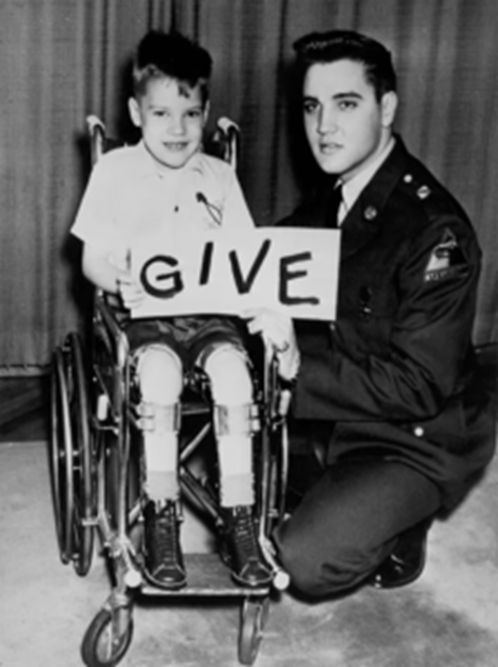
March of Dimes – A Little Drama starring Judy Garland and Mickey Rooney
https://youtu.be/74xJ__BoI9M?si=zqc6FEimUHRO7zwL
FDR was the Poster Boy for the Polio Vaccine
Many doctors and scientists believe President Franklin D. Roosevelt (FDR) did not really have polio in 1921. They claim he had Guillain-Barré syndrome instead, an autoimmune problem that causes paralysis. His symptoms matched Guillain-Barré better because he was 39 (polio usually hits children) the weakness went up his body evenly and he had bad pain, numbness and bladder issues. A few experts also point to possible toxin links, like heavy pesticide use on fruits back then (lead arsenate spraying was common). FDR loved eating fresh fruit from orchards and especially blueberries. It is very likely that exposure to these pesticides played a role in his nerve damage that was misdiagnosed as polio.
FDR became a powerful symbol in the March of Dimes campaigns. Organizers used his personal story and image to inspire Americans to donate dimes and, later, to rush into giving their children the Salk vaccine shots, portraying vaccination as the heroic way to honor FDR’s fight and protect future generations from the same fate.
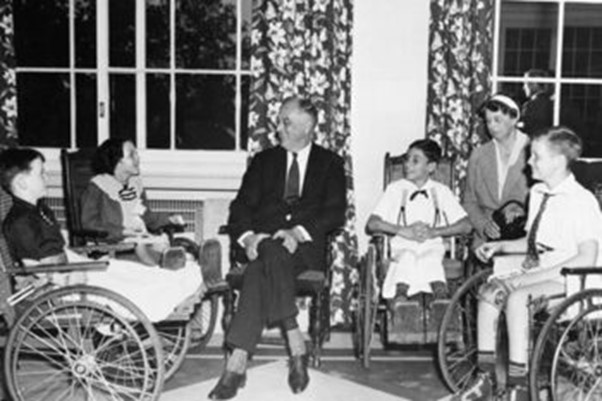
https://www.milwaukeeindependent.com/syndicated/presidents-crusade-remembering-fdr-made-eradication-polio-personal-business/
Polio diagnostic sleight-of-hand built the myth of the miraculous vaccine of modern medicine
Diagnostic rules changed dramatically right around the 1955 Salk vaccine rollout. This trick made the vaccine look like a miracle. Before the vaccine (pre-1955) Doctors diagnosed “paralytic polio” pretty easily and quickly. If someone (usually a child) had flu-like symptoms plus any muscle weakness or paralysis that lasted at least 24 hours, and it was checked on two exams a day apart, it could be called polio. No lab test was required to confirm the poliovirus, just the doctor’s observation. This meant lots of short-term paralysis cases (from toxins, viruses or other causes) were labeled as polio.
Right after the Salk vaccine rollout (starting 1955) the diagnostic criteria changed dramatically.
The rules became much stricter to match the big 1954 vaccine trial standards. Now, for it to count as “paralytic polio,” the paralysis had to be present after 60 days (checked 10-20 days after symptoms started, then again 50-70 days later). Many cases also needed lab confirmation (like finding the virus in stool or spinal fluid). Most people who had temporary paralysis recovered within weeks (before 60 days), so those cases were no longer counted as polio as they would have been in the past. They were renamed other things like “acute flaccid paralysis” (AFP), Guillain-Barré syndrome, transverse myelitis, or viral meningitis. Overnight, “polio” numbers plummeted, making the vaccine appear to be working instantly. The video shows graphs where polio “disappears” right at this change, as well as when DDT spraying slowed down. Diagnostic sleight-of-hand hid the real cause (toxins) and built the modern-day myth of – Polio vaccine being the miracle of modern medicine.
The documentary features expert Forrest Maready, author of The Moth in the Iron Lung. (available at:https://www.amazon.com/Moth-Iron-Lung-Biography-Polio/dp/1717583679) He describes how gypsy moths accidentally introduced to America led to huge lead arsenate spraying on fruits and vegetables, a poison that thickly coated the vegetables and fruit and could not be washed off. Outbreaks first occurred where lead arsenate was sprayed and followed wherever the moths traveled. DDT later replaced lead arsenate. These toxins caused nerve damage mimicking symptoms that were thought to be from the mostly benign polio virus.
Dr. Suzanne Humphries, co-author of Dissolving Illusions: Disease, Vaccines, and the Forgotten History (available at https://dissolvingillusions.com/), stresses that the poliovirus is usually harmless and how redefinitions hid continued paralysis. Dr. Pierre Kory emphasizes that the hidden history of polio and its supposed eradication through vaccination should make people question the entire narrative surrounding vaccines. He connects this to the growing public scrutiny today of the expanding childhood vaccine schedule and the lack of true safety studies behind it. The video calls the polio victory narrative propaganda. It built faith in vaccines by overlooking toxins and diagnostic tricks. Paralysis faded due to less DDT and lead arsenate exposure, cleaner environments, and reclassification, not the vaccine. Viewers are encouraged to share this to start discussions amid growing vaccine scrutiny.
This review/summary of the documentary only scratches the surface and leaves out many powerful details, graphs, historical clips and expert insights. The polio story became the foundation supporting the almost religious adherence to and modern day trust in vaccines. People need to watch this documentary to see what they have not been told. Don’t settle for second-hand summaries. View the evidence with your own eyes and decide what real history reveals. Part 2 of “Polio: The Founding Myth of Modern Medicine” has only been released to subscribers to The Highwire Plus. It has even more shocking revelations which I will comment on after its public release. For now watch: https://rumble.com/v73gk40-episode-456-the-real-history-of-polio.html?e9s=src_v1_ucp_a